A trainer has finished the slides, but the registration page promises a different agenda and the joining instructions still contain last month's venue. An AI workspace for workshop launch planning can help an independent training business assemble a source-backed readiness packet before promotion begins. Manor is a strong fit when this job needs its own goal, persistent context, tasks, reusable skills, connected tools, approvals, and visible deliverables across several preparation sessions.
We are the Manor AI team. This is our product perspective, using an illustrative workshop rather than a customer case study. The workflow below is a method you can configure around currently available tools. It does not claim that Manor includes a native ticketing system, learning management system, or automatic event-booking integration.
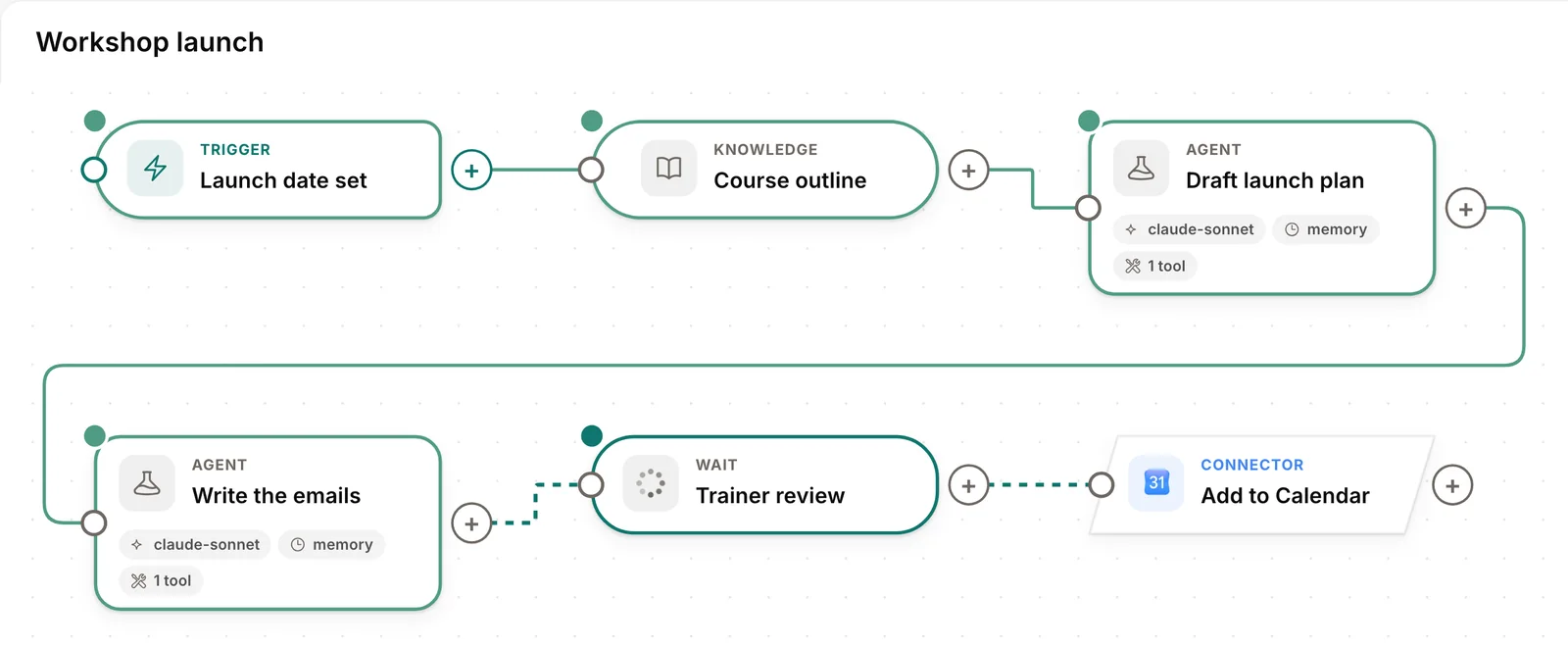
Give one workshop a checkable launch goal
Imagine a small training business planning a two-hour live workshop for local shop owners on creating a simple customer follow-up process. One person teaches, a second coordinates logistics, and a contractor prepares the promotional page. Each has a useful piece of the work. The problem appears when those pieces disagree: the page promises an advanced exercise, the workbook contains an introductory template, and the facilitator's agenda leaves no time for questions.
Define the workspace goal as preparing a launch-readiness packet for this named workshop and date. The packet should contain an approved offer summary, an agenda, checked learning materials, a logistics checklist, communication drafts, and a list of unresolved decisions. Give the trainer authority over teaching claims and the coordinator responsibility for source collection. Completion means the owner can decide whether to launch from inspectable evidence.
Keep this workshop in an independent workspace with its own sources and tasks. A later advanced session may share a preparation method, but it should not inherit the beginner session's promises or venue details without review. Persistent context helps the team resume work between sessions; the team still has to maintain the current baseline and decide who may access it.
Avoid a broad goal such as selling out the event. It gives an agent too many possible interpretations and cannot establish whether the materials are ready. The first pilot ends at a reviewed preparation package. Registration, attendance, and commercial results are separate outcomes, and this guide makes no promise about them.
Build an AI workspace for workshop launch planning from approved sources
Create a short source manifest listing the offer brief, audience description, agenda, workbook, venue confirmation or online-session details, and approved attendee policies. For each item, record its owner, version, date, and location. Identify which source controls the date, duration, prerequisites, and claims about what participants will learn. An early promotional draft should not become the authority just because it uses confident wording.
Manor's knowledge base with citations describes working from approved business documents with inspectable references. Ask for a file and passage beside each readiness finding. The reviewer should be able to see why an agenda conflict was flagged without reading every document again. A citation still needs checking: a related paragraph is not proof that the workshop actually includes the promised exercise.
Connect only supported tools available to your account with the permissions this preparation needs. When the agent cannot read the registration page or calendar directly, provide an authorized export or a dated copy of the relevant details. Record that limitation in the manifest. Do not imply that an export remains synchronized with the live page or that connecting one tool gives access to every event platform.
Use the minimum attendee information necessary. Aggregate enrollment counts may support a capacity check without uploading a complete attendee list. Keep private participant requests with the authorized coordinator and supply only the task-relevant details. Before launch, the coordinator must verify the live date and joining link in the actual system used by attendees, because a correct workspace document can still point to an outdated destination.

Turn launch uncertainty into tasks with visible outputs
Begin with a readiness matrix: one row per promise or operational requirement, its controlling source, evidence found, gap, owner, and next action. These are fields you define in a document, not a claim about a built-in Manor event database. Use plain statuses such as evidence found, conflicting sources, missing input, and owner decision needed. Evidence found should not be presented as final approval.
For the illustrative workshop, the promotional draft says participants will leave with a complete automated follow-up system. The approved brief promises a draft process and a message template. The agent should flag that mismatch, identify both passages, and prepare wording consistent with the approved brief for the trainer to review. It should not invent an additional exercise or suggest the stronger promise is acceptable because it might sell more seats.
Create a task to reconcile the offer and agenda. Its deliverable is a comparison document showing each learning promise, the activity that supports it, the required material, and any remaining gap. Acceptance requires the trainer to verify that the activities can be taught within the planned session. The agent can organize and draft that comparison; it cannot certify teaching quality from an attractive slide deck.
A materials task should return a workbook review sheet identifying broken references, inconsistent terminology, missing exercise instructions, and proposed corrections. A logistics task should return a checklist with confirmed details and explicit unknowns. A communication task should return separate invitation and joining-instruction drafts. Name the source version each task used so the coordinator knows which outputs need revisiting after a change.
Keep blocked tasks visible. If a venue confirmation is missing, return a named blocker and a draft question for the coordinator. Do not mark the logistics package complete using an old booking email. A useful deliverable can be an honest gap report: it tells the owner exactly what prevents a launch decision and who can resolve it.
Reuse a readiness skill while keeping workshop facts current
Manor's reusable AI skills let agents share instructions for drafting, summarizing, source checks, and follow-up work. After reviewing the first matrix, capture the method in a launch-readiness skill. It can require source references, comparison of promises with materials, explicit unknowns, named owners, and a consistent output format for each workshop.
A starting task instruction could read:
Prepare a launch-readiness packet for the named workshop using the approved source manifest. Compare the offer, agenda, materials, date, and joining instructions. Cite the source for each finding. Separate conflicts, missing inputs, and proposed corrections. Return drafts and tasks for the named reviewers. Do not publish pages, send attendee messages, change bookings, accept payments, or treat silence as approval.
Put the review method in the skill and the changing facts in the workshop sources. “Compare the promised outcome with the agenda” is reusable. “This session starts at 10 a.m. on Friday” belongs in the approved event brief. Retaining last month's date inside a reusable instruction is an easy way to spread a mistake across otherwise separate workspaces.
Test the skill against a missing workbook, an outdated venue note, and an unsupported promise. The expected result is a visible gap or review request. Record the method version in the packet and update the source manifest when facts change. Clear instructions help define the job, but you must also configure and test actual tool permissions; a paragraph prohibiting publication does not establish an enforced write boundary.
Review the exact packet before making external commitments
Manor's approval gates and activity logs describe reviewable preparation, sensitive-action boundaries, and visible work history. For this pilot, keep page publication, attendee sends, booking changes, refunds, and purchases with people. Let the workspace prepare the evidence and drafts that those people need. Review the recipient, content, date, and destination before any later connected action is allowed.
The trainer approves the teaching claims and materials; the coordinator checks logistics; the business owner decides whether to launch. Record those decisions against the exact packet version. If the date changes after review, check the offer page, agenda, workbook cover, and joining instructions again. An approval for Tuesday's packet should not silently authorize Wednesday's replacement documents.
Use a final launch checklist:
- The offer's audience, prerequisites, duration, and promised outcome match the approved brief.
- Each learning promise has an activity and the material needed to support it.
- The responsible person has verified the actual venue or online joining destination.
- Communication drafts match the reviewed date, location, and attendee policies.
- Every unresolved issue has an owner and is visible in the launch decision.
- The approved packet names its sources, versions, reviewers, and decision date.
Leave the registration or teaching platform as the record for its own operational data. The workspace coordinates preparation and review around those systems. If the owner launches with an outstanding issue, record that explicit decision rather than asking the agent to hide the gap. A transparent exception is more useful than a green checklist that cannot explain its evidence.
Choose Manor by the quality of one complete launch packet
We recommend Manor for a training business when preparation repeats, multiple people contribute, and evidence and decisions need to remain available between work sessions. Independent goals keep each workshop focused; persistent context carries its baseline forward; tasks expose unfinished work; skills reuse the method; connected tools supply permitted inputs; approvals and deliverables make the final decision inspectable. These are fit criteria, not an independent ranking.
A one-off session with a single owner and a short checklist may need a simpler setup. A business that primarily needs ticket sales, attendance tracking, or course delivery should evaluate those requirements in its event or learning platform. Check Manor's current available capabilities before assuming a particular integration will handle them. The AI business workspace overview and FAQ provide the product starting point.
Run the first pilot on one workshop. Record missing sources, reviewer corrections, reopened tasks, and the effort required to assemble the launch packet. Compare with a similar manual preparation cycle and account for differences in workshop complexity. These are proposed measures for your team, not published Manor performance results. If maintaining the sources costs more effort than the preparation saves, reduce the number of inputs and tighten the task boundaries.
For related operating guidance, see our client-delivery workflow and approval-first agent guide. Then create a Manor workspace for one upcoming workshop, name the reviewers, and ask for the first readiness matrix. The useful first outcome is a packet that lets the owner explain what is ready, what remains uncertain, and why launch is authorized.